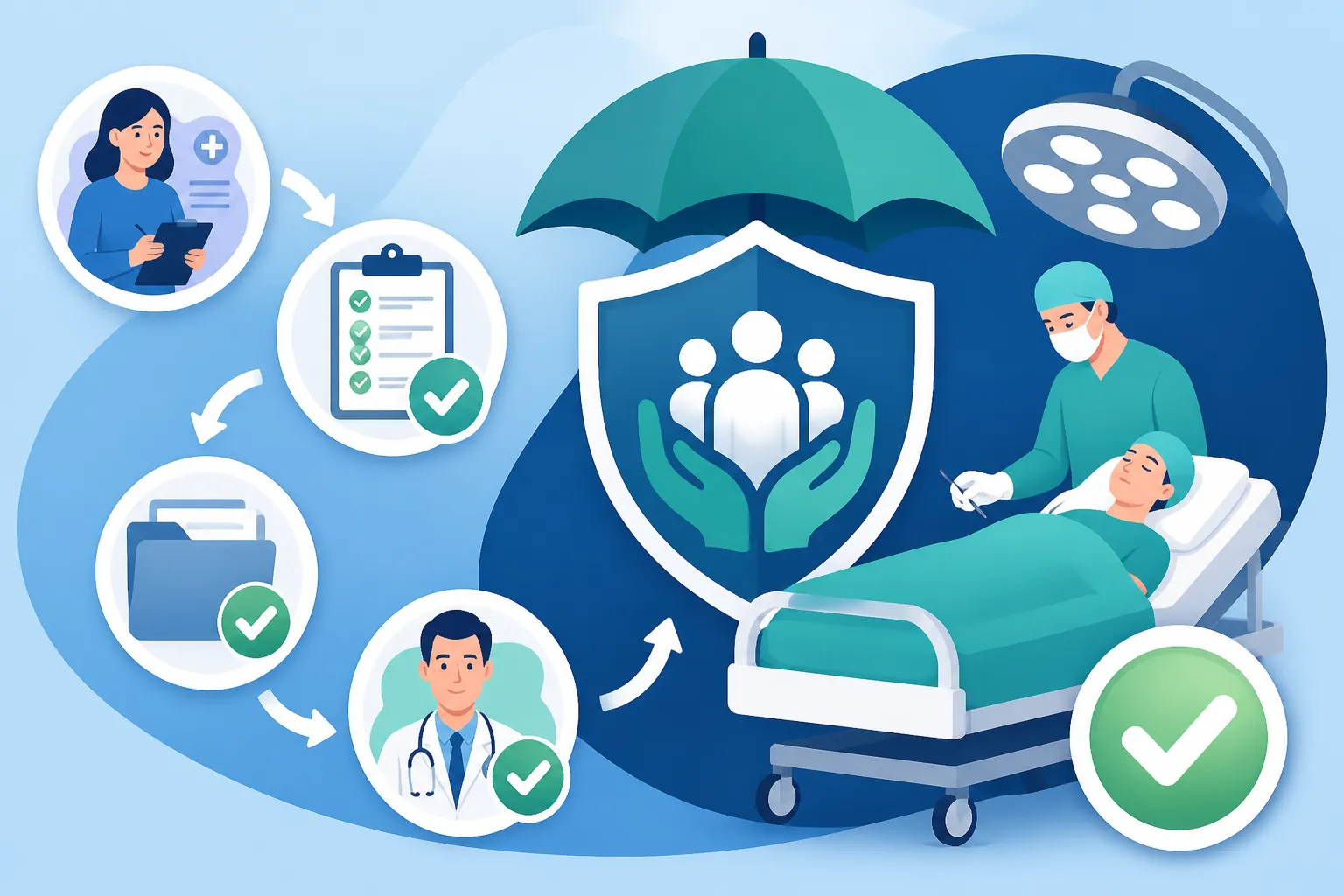
What Is the Process for Getting Surgery Covered by CNAS?
Facing the prospect of surgery in a foreign country can be incredibly daunting, especially when you're trying to figure out how the local public healthcare system actually works. Many expats arrive in Romania, start contributing to the national health fund, but then wonder, "What happens if I need a serious medical procedure?" This guide aims to demystify the process of getting surgery covered by Romania's National Health Insurance House (CNAS), walking you through each step with realistic expectations and practical advice.
Understanding CNAS Coverage for Surgical Procedures
First things first: if you're legally residing in Romania and contributing to the CASS (Health Social Contributions) fund, you are entitled to healthcare services, including necessary surgeries, through the public system. The CNAS system is designed to provide comprehensive care, but "comprehensive" often comes with its own unique set of administrative hurdles and potential waiting times. It's crucial to understand that simply having a CNP and paying your contributions isn't a magic key that instantly opens all doors; it's the foundation upon which you build your access to care.
Eligibility and Initial Requirements
To even begin discussing surgery coverage, you must be a registered contributor to the CASS fund. This means you’re either employed by a Romanian company, self-employed (PFA/SRL), or voluntarily paying your contributions. If you’re an EU citizen, your EHIC might offer some initial coverage, but for long-term residents and planned surgeries, being integrated into the Romanian system is paramount. You'll need your CNP (Personal Numeric Code) to access any public health services, and it’s a non-negotiable step. Without it, you’re often stuck in a bureaucratic limbo that prevents progression. You can learn more about How Romania's Health Insurance House (CNAS) Works: A Full Overview and Registering for Public Health Insurance (CASS) in Romania (2027).
The system technically covers a wide array of surgical procedures deemed medically necessary, from general surgery to orthopaedics, gynaecology, and more complex interventions. However, the exact scope and any patient co-payments can vary, though for most essential surgeries, the costs directly related to the procedure, hospital stay, and basic medication are covered. It's the ancillary costs and the path to getting there that often surprises people. Remember, even with coverage, there might be slight fees for certain consumables or preferred hospital amenities, which are not usually significant but can add up.
The Role of Your Family Doctor (Medic de Familie)
Your family doctor, or medic de familie, is not just a gatekeeper but your primary point of contact and navigator within the Romanian public health system. For any medical issue, especially one that might lead to surgery, your journey almost always starts here. Many expats find this a frustrating initial step if they're used to direct access to specialists, but it's a deeply ingrained aspect of Romanian healthcare.
When you suspect you need a surgical intervention or are experiencing symptoms that might require one, your first appointment should be with your medic de familie. They will assess your condition, perform initial examinations, and if they deem a specialist consultation necessary, they will issue you a bilet de trimitere (referral ticket). This document is absolutely vital for accessing specialist care under CNAS coverage. Without it, you'll either be turned away by the specialist or be forced to pay for the consultation privately. Choosing and registering with a family doctor is a key step, and you can find more guidance in The Expat Guide to Finding a Family Doctor (Medic de Familie) in Romania.
It’s not uncommon for expats to feel like their family doctor is hesitant to issue referrals, especially if the condition isn't immediately critical. This can be a point of friction, as many Romanian family doctors are trained to manage a wide range of conditions themselves before referring out. Be prepared to clearly articulate your symptoms, medical history, and concerns. Bringing any relevant medical records from your home country, even if you have to translate them yourself initially, can greatly aid your family doctor in making an informed decision. If you have any temporary or travel health insurance like SafetyWing, this initial doctor’s visit might be covered under its terms if it’s an acute condition, providing peace of mind while you're getting integrated into the local CNAS system.
The Referral Process to a Specialist and Hospital
Once your medic de familie has issued that precious bilet de trimitere, you're ready to seek a specialist. This is where the public vs. private discussion often becomes very real for many expats.
Finding a Specialist and Initial Consultations
With your referral, you can now approach a specialist in the public system. These specialists typically work in policlinici (outpatient clinics) affiliated with public hospitals, or directly within the hospitals themselves. Finding an available specialist who works with CNAS and has acceptable waiting times can sometimes feel like searching for a needle in a haystack, especially in larger cities like Bucharest or Cluj-Napoca where demand is high. It's often a matter of calling around, asking for recommendations, or even visiting the policlinică in person to inquire about appointments. This can be particularly challenging if your Romanian language skills aren't strong, making How to Find an English-Speaking Doctor in Romania a valuable resource.
When you finally get an appointment, the specialist will review your case, conduct further examinations, and potentially order additional tests (blood work, imaging like X-rays, CT scans, or MRIs). All these tests, if ordered by a CNAS-affiliated specialist with a valid referral, should generally be covered by CNAS. However, here's a common expat frustration: while the tests are covered, the waiting lists for public diagnostic services can be painfully long. An MRI, for instance, might have a wait of several weeks or even months in the public system, especially for non-urgent cases. This often leads expats to consider private clinics for diagnostics, where you pay out-of-pocket but get immediate service. The results from private tests are typically accepted by public doctors.
Deciding on Public vs. Private Pathways for Diagnosis and Treatment
This brings us to a critical juncture for many foreigners: when to stick with the public system and when to go private. As covered in Public vs Private Healthcare in Romania: Which Should Expats Choose?, both have their merits.
| Feature | Public System (CNAS Covered) | Private System (Out-of-Pocket or Private Insurance) |
|---|---|---|
| Cost | Generally free for CASS contributors (minor co-pays possible) | Full cost paid by patient or covered by private insurance |
| Access to Specialists | Requires bilet de trimitere from family doctor, potential waits | Direct access, no referral needed, usually quick appointments |
| Diagnostic Tests | Covered, but often long waiting lists for advanced imaging | Paid, but immediate access and faster results |
| Hospital Facilities | Can be older, varying standards, less personal amenities | Modern, higher comfort, better patient-to-staff ratios |
| Waiting Time for Surgery | Can be significant, especially for non-emergencies | Much shorter, often within weeks |
| Doctor Communication | Varies, English speakers might be harder to find | Often better English communication, more patient-focused |
| Medication | Partially or fully compensated after discharge | Purchased at full price, then reimbursed by private insurer |
If the specialist confirms that surgery is indeed necessary, they will then put you on a waiting list for the public hospital. The length of this waiting list depends entirely on the urgency of your condition, the specific type of surgery, and the hospital's capacity. For life-threatening emergencies, you will be prioritised immediately. For elective surgeries, however, you might wait anywhere from a few weeks to several months. This waiting period is another common point of stress for expats.
Pre-Surgery Evaluation and Hospital Admission
Once you've navigated the referrals and specialist consultations, and surgery has been scheduled, the next phase is the pre-operative evaluation and hospital admission. This segment is equally crucial and requires careful attention.
Pre-Operative Assessments and Consultations
Before any surgery in a public hospital, you’ll undergo a series of pre-operative assessments. These usually include a thorough physical examination, blood tests, urine tests, an electrocardiogram (ECG), and potentially chest X-rays or other specific imaging depending on the surgery. The goal is to ensure you are fit enough for the procedure and anaesthesia, and to identify any potential risks. These tests are typically done at the hospital or an affiliated policlinică and are covered by CNAS, provided you have all your necessary documents and active health insurance.
You will also have consultations with the surgeon performing your operation and the anaesthesiologist. This is your opportunity to ask questions, understand the procedure, potential risks, and the recovery process. Don't be shy about asking for clarification, or if possible, bringing a Romanian-speaking friend or interpreter to ensure you fully grasp all the information. Remember that Understanding Hospital Care at a Romanian Spital can help set expectations for the environment you'll be entering.
Hospital Admission Process
On the day of your admission, you’ll typically report to the hospital's admissions office (biroul de internări). You’ll need to present your ID (passport/residence permit), your CNP, your health insurance card (if you have one, though it's not always physically used in this context if your CNAS contributions are active), and any relevant medical documents, including the bilet de trimitere from your family doctor and the specialist’s recommendation for surgery. This is where the paper trail really matters, so make sure all your documents are organised.
The administrative staff will process your admission, which can sometimes involve a bit of waiting and paperwork. Be prepared for a potentially impersonal process, as public hospitals are often busy. Once admitted, you'll be assigned a bed in a ward. It's advisable to bring your own toiletries, comfortable clothes, and possibly some entertainment (books, tablet), as hospital amenities can be basic. While you might feel anxious, remember that the medical staff are there to help, even if language barriers make communication tricky sometimes.
The Surgery, Post-Operative Care, and Beyond
The big day arrives, and after the procedure, the recovery journey begins. This phase is just as important as the preparation, focusing on healing and getting back on your feet.
The Surgical Procedure and Immediate Recovery
The surgery itself will follow standard medical protocols. After the procedure, you’ll be monitored closely in a recovery area before being moved back to your assigned ward. The immediate post-operative period focuses on pain management, monitoring for complications, and ensuring your vital signs are stable. Nurses will check on you regularly, and the medical staff will guide you through the initial steps of recovery, such as when you can start eating or moving.
Communication during this intense period can be challenging if you don't speak Romanian. While many younger doctors and some nurses might have some English, relying solely on it can be risky. Having a phrasebook, a translation app, or a friend who can visit and interpret can be incredibly beneficial. Expats often feel a sense of vulnerability here, so knowing what to expect, even if it’s just the basic routine, can help alleviate some anxiety.
Post-Operative Care and Follow-ups
Once you are stable enough, you will be discharged from the hospital. Before discharge, you should receive instructions for at-home care, information about any necessary Prescription Medications and Pharmacies in Romania: The Complete Guide, and a date for your follow-up appointment(s). These follow-ups are crucial to monitor your recovery, remove stitches (if applicable), and adjust any treatment plans. These follow-up consultations, if done in the public system and with a valid referral (which the hospital should provide upon discharge, or you get from your family doctor), are also covered by CNAS.
Your medic de familie will again play a significant role in your longer-term recovery, providing ongoing care, managing medication, and issuing further referrals for physiotherapy or rehabilitation if needed. They are often the best source for general medical advice once you're back home. This highlights the cyclical nature of the Romanian healthcare system, always routing back to your primary care physician.
Navigating Challenges and Considering Alternatives
It's not always smooth sailing. Challenges can include language barriers, long waiting times for certain procedures or diagnostics, and variations in the quality of hospital facilities. If you encounter significant delays or are dissatisfied with the public options, exploring private healthcare is always an option. While CNAS covers the basics, private clinics and hospitals (such as Regina Maria or MedLife, though not directly covered by CNAS for complex surgeries without a separate private insurance plan) offer speed, comfort, and often more personalised care, albeit at a cost. You can look at The Cost of Healthcare in Romania: A Complete Breakdown for Foreigners (2026) to understand the financial implications.
For those who are just starting their life in Romania, or who may not yet be fully integrated into the CNAS system, having international private health insurance can bridge these gaps. Even something like SafetyWing, which is designed more for digital nomads and travellers, can provide a safety net for unexpected medical issues, including some emergency surgeries, before the public system becomes accessible or for situations where you might need to return to your home country for a specific procedure. While it won't replace CNAS for elective surgery within Romania, it’s an important consideration for that initial transition period or for unforeseen emergencies. For specialist care, always be aware that How to Access Specialist Care Through the Romanian Public System outlines the standard route.
It's a journey, not a sprint, and being armed with information and a healthy dose of patience will make navigating surgical coverage through CNAS much more manageable.
Disclaimer
The information provided in this guide is for general informational purposes only and does not constitute medical, legal, or financial advice. Healthcare regulations and procedures in Romania can change, and individual circumstances vary. Always consult with a qualified medical professional, legal advisor, or CNAS representative for advice tailored to your specific situation.