Can Americans Get a Digital Nomad Visa for Romania?
Oh, the digital nomad dream in Romania! It’s a question I hear a lot, especially from my American friends looking for a fresh start or just a change of scenery from the usual European spots. Navigating the visa process can feel like trying to solve a Rubik's Cube blindfolded, but don't worry, you're in the right place. This guide is going to walk you through everything you need to know about getting a Digital Nomad Visa for Romania as an American, cutting through the red tape and giving you the real-world lowdown.
Yes, Americans Can Absolutely Get a Digital Nomad Visa for Romania!
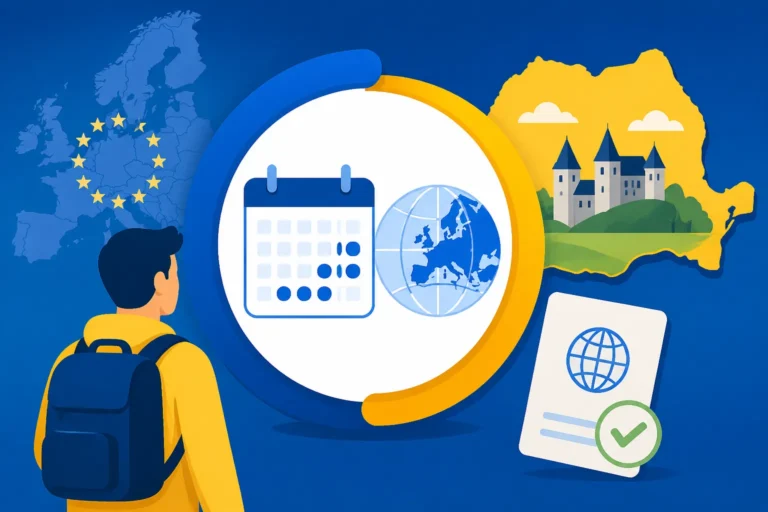
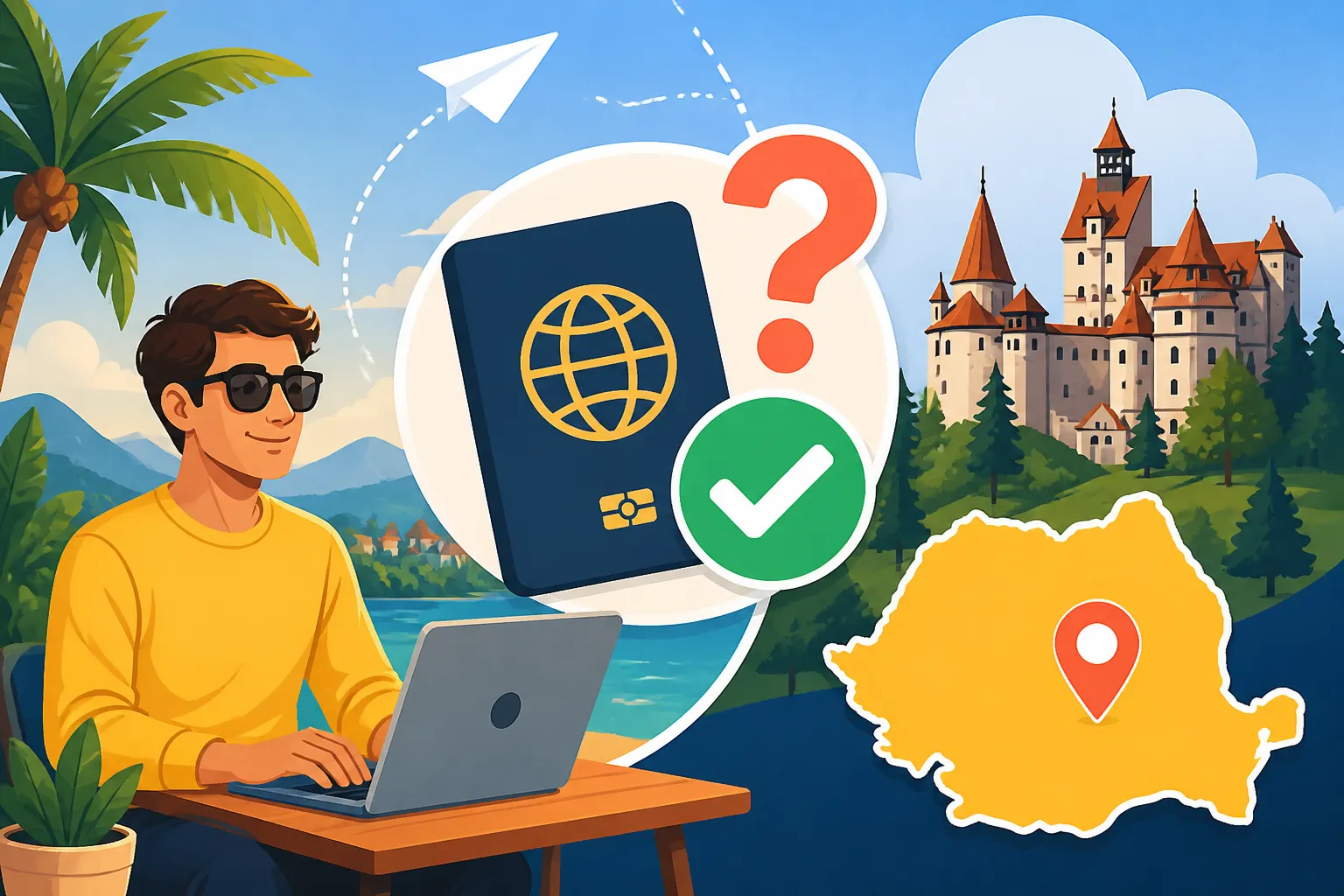
Let's get straight to it: The answer is a resounding yes. Romania launched its Digital Nomad Visa (DNV) in late 2021, and it's specifically designed for non-EU/EEA citizens who can perform their work remotely using telecommunication technology. This includes our friends from the United States, who historically needed a regular work visa or a long-stay visa based on other grounds to live here for extended periods. This DNV is a fantastic pathway for Americans eager to experience Romania's vibrant culture, breathtaking landscapes, and surprisingly affordable cost of living, all while maintaining their professional life back home or with international clients.
Before this visa existed, if you were an American and wanted to stay longer than the typical 90-day Schengen tourist limit, your options were pretty limited and often involved more complex routes like setting up a company or getting a traditional employment visa. The Digital Nomad Visa simplifies things immensely, recognizing the modern way many of us work and live. It acknowledges that your income comes from outside Romania, meaning you won't be competing for local jobs, which is a key part of its appeal and purpose.
The Romanian government was quite forward-thinking in establishing this visa category. They recognized the economic benefits that digital nomads bring, from contributing to local businesses to injecting foreign currency into the economy, all without burdening the local job market. So, if you've been eyeing those ancient castles, charming cobbled streets, or the bustling tech scene in Bucharest, know that a clear path now exists for you to make it your temporary home base. It's a game-changer for many who previously found the bureaucratic hurdles too daunting.
Understanding the Legal Framework for Non-EU Citizens
As an American, you fall under the category of non-EU/EEA citizens when it comes to Romanian immigration law. This is a crucial distinction because EU/EEA citizens enjoy freedom of movement and residency rights within Romania without needing a visa. For the rest of us, including those from the US, a visa is the initial gateway, followed by a residence permit once you're on Romanian soil.
The legal basis for the Digital Nomad Visa is found within Romanian Emergency Government Ordinance no. 102/2005 on the legal regime of foreigners in Romania, specifically amended to include this category. It defines a digital nomad as a foreigner who is employed by a company registered outside Romania or who owns a company registered outside Romania, and who provides services using information and communication technology. Essentially, you're bringing your job with you, not seeking one here.
This framework is designed to ensure that you genuinely fit the "digital nomad" profile. It’s not a loophole for long-term tourism or traditional employment. The authorities want to see clear evidence that your work is genuinely remote and that your income is stable and substantial enough to support yourself without becoming a burden on the Romanian state. They’ve laid out specific requirements to prove this, which we'll dive into next. It’s about being self-sufficient and contributing to the local economy indirectly, through your spending and presence, rather than directly through employment or local taxation on income earned here (though you will be paying local taxes if you stay long enough, but that’s a whole other can of worms, which we discuss in our guide, The Complete Guide to Taxes in Romania for Expats (2027)).
Key Eligibility Requirements for American Digital Nomads
Alright, so you know you can get one, but what do you need to get one? This is where the rubber meets the road, and honestly, this is where many expats get tripped up if they don't have all their ducks in a row. The Romanian authorities are quite thorough, and for good reason. They want to make sure you’re a legitimate digital nomad who will be a positive addition to the community.
The core of the eligibility criteria revolves around proving you have legitimate remote work, a stable income, and sufficient means to support yourself. It's not just about saying you work remotely; it's about providing irrefutable documentation that backs it up.
Demonstrating Remote Work and Income Stability
This is perhaps the most critical component. You need to unequivocally prove that your work can be performed entirely remotely and that your income is consistent and sufficient.
-
Proof of Remote Employment or Business:
- If employed: You'll need a current employment contract with a company registered outside of Romania. This contract must clearly state that your work can be performed remotely. A letter from your employer confirming your remote work status, job title, and the nature of your duties will also be essential. They want to see that you're not just taking an extended vacation; you're genuinely still working for your foreign employer.
- If self-employed/freelancer: You’ll need documentation proving you own a company registered outside Romania or that you are a freelancer with clients located outside Romania. This could include business registration documents, contracts with international clients, invoices, and a portfolio of work. The key here is outside Romania. If your primary client base or employer were Romanian, it would typically fall under a different visa category.
- Demonstrating Experience: Some guidance also suggests proving a minimum of three years of experience in your field, which helps establish your professional stability and genuine capacity for remote work. This isn't always strictly asked for, but having it ready can't hurt.
-
Income Threshold: This is a non-negotiable part of the application. You must demonstrate that you earn at least three times the average Romanian gross monthly salary. As of early 2024, the average gross monthly salary in Romania is approximately 8,145 RON. This means you need to show a consistent income of at least 24,435 RON per month, which translates to roughly €4,900 or about $5,300 USD at current exchange rates. And this isn't just a one-time thing; you need to show this income for at least the last six months leading up to your application.
- How to prove it: Bank statements showing consistent income deposits, pay stubs from your employer, invoices and payment confirmations from clients if you're a freelancer, and tax returns can all serve as evidence. The more clear and consistent your financial history, the smoother this part of the process will be. They need to see that this income is stable and not just a temporary spike.
It's vital to have these documents meticulously organized and translated into Romanian by an authorized translator, unless otherwise specified by the consulate. Don't underestimate the importance of clear, unambiguous proof. It’s better to over-deliver on documentation than to face delays or rejection due to insufficient evidence.
Other Essential Documents and Conditions
Beyond your remote work and income, there's a checklist of other requirements that are standard for most long-stay visas in Romania.
- Valid Passport: Your passport must be valid for at least six months beyond your intended period of stay in Romania. Make sure it has at least two blank pages for the visa sticker.
- Proof of Accommodation: You need to show you have a place to live in Romania. This could be a rental agreement, a title deed if you've bought property, or a notarized statement from someone offering you accommodation. Even a booking for a long-term Airbnb or hotel can sometimes suffice for the initial visa application, but you'll need something more substantial for the residence permit once you arrive. We have a detailed guide on How Do I Prove Accommodation for a Romanian Residence Permit?.
- Medical Travel Insurance: You must have medical travel insurance that covers your entire stay in Romania and is valid for the Schengen area, with a minimum coverage of €30,000 (or equivalent in USD). This is crucial, as healthcare is a serious consideration. While you'll need local health insurance once you get your residence permit, for the visa application, robust travel insurance is key. Brands like Cigna Global are often recommended for their comprehensive expat health insurance plans, which can cover you internationally and meet visa requirements.
- Clean Criminal Record: You'll need a certificate of good conduct or a criminal record check from your country of origin (the US) and any other countries where you've resided for more than six months in the past five years. This document must be apostilled (or superlegalized, depending on the country) and translated into Romanian.
- Letter of Intent: A personal statement explaining your reasons for wanting to live in Romania as a digital nomad, your plans for your stay, and how you meet the eligibility criteria. This is your chance to really articulate your case.
- Application Fee: There will be a non-refundable visa processing fee. Make sure you check the current fees on the consulate website, as they can change.
- Schengen Zone Compliance: Remember, Romania is part of the broader Schengen Area rules regarding long-stay visas, even if it's not fully in the Schengen Area yet for land borders. This visa is a national long-stay visa (Type D-VN), which allows you to apply for a residence permit once you arrive. However, it’s distinct from a regular Schengen visa (Type C) and doesn't count towards your 90/180-day limit in the same way. Still, be mindful of your overall stay in the Schengen Zone, as this visa is specifically for Romania. For more on this, check out Understanding Schengen Rules and the 90/180 Limit for Romania.
Gathering all these documents can be a bit of a marathon, not a sprint. Start early, get your translations done by authorized individuals, and ensure everything is dated correctly. It will save you immense headaches down the line.
The Application Process: Step-by-Step for Americans
So, you've checked off the eligibility boxes and started gathering your documents. Now comes the actual application process. It’s a two-stage journey: first, applying for your long-stay visa at a Romanian consulate in the US, and then, applying for your residence permit once you're in Romania.
Stage 1: Applying for the Long-Stay (Type D-VN) Visa in the US
As an American citizen, your journey begins at a Romanian Embassy or Consulate in the United States. You cannot apply for the Digital Nomad Visa from within Romania if you’re already there on a tourist visa. You must apply from your country of residence.
-
Online Visa Application:
- Your first stop is the official Romanian Ministry of Foreign Affairs (MAE) online visa portal (evisa.mae.ro). This is where you'll create an account and fill out the initial visa application form. Select the "Long-Stay Visa" and then specify "Other purposes" or "Digital Nomad" if it’s an explicit option.
- Upload all your scanned supporting documents. This platform is designed to streamline the process, allowing the consulate to pre-screen your application before you even show up for an interview.
- Be thorough and accurate. Any discrepancies or missing documents here can lead to delays or outright rejection. Double-check everything before hitting submit.
-
Scheduling an Appointment:
- After submitting your online application and once it’s pre-approved (you’ll usually receive an email confirmation), you'll need to schedule an appointment at the Romanian Consulate General closest to you (e.g., in Washington D.C., New York, Chicago, Los Angeles, Miami).
- Consulate appointments can sometimes be tricky to get, so start looking for available slots as soon as you're able. Be prepared for potential waiting times.
-
The Consulate Interview:
- This is where you'll present all your original documents, including your passport, the printout of your online application, and all the supporting documents you uploaded (employment contracts, bank statements, insurance, criminal record check, etc.). Make sure everything is in order, translated, and apostilled where required.
- The consular officer will review your documents and ask questions about your remote work, your financial stability, and your intentions in Romania. Be honest, clear, and confident in your answers.
- You’ll also pay the visa processing fee at this stage.
- It's important to remember that applying for Understanding the Long-Stay (Type D) Visa for Romania is a serious step. Treat the interview with respect and professionalism.
-
Visa Processing Time:
- After your interview, the consulate will process your application. This can take anywhere from a few weeks to a couple of months, depending on the volume of applications and specific complexities of your case. It's rarely a quick turnaround, so factor this into your travel plans.
- If approved, your passport will be returned to you with the D-VN visa affixed inside. This visa is typically valid for 90 days, allowing you to enter Romania and proceed to the next stage.
Stage 2: Applying for Your Residence Permit in Romania
Once you arrive in Romania with your shiny new D-VN visa, the race isn't over. You have a limited window – usually no more than 30 days after your entry – to apply for your actual residence permit (Permis de Ședere) at the General Inspectorate for Immigration (IGI). This is the document that will allow you to legally live and stay in Romania long-term.
-
Prepare Your Documents (Again):
- You’ll need to submit many of the same documents again, potentially with updated validity or local versions (e.g., local health insurance).
- Ensure your proof of accommodation is solid and long-term (a proper rental contract registered with ANAF, the tax authority).
- You'll also need to get a Romanian tax number (NIF) and potentially a Personal Numeric Code (CNP) if you don't already have one, which is essential for various administrative tasks, including banking and healthcare. Our guide on How to Get a Romanian Tax Number (NIF) and CNP will be very helpful here.
- You'll need a medical certificate from a Romanian clinic stating you're fit to live in the country. This is a standard requirement for residence permits.
-
Book an IGI Appointment:
- This is often done online through the IGI portal, and appointments can be scarce, especially in larger cities like Bucharest or Cluj-Napoca. Start checking for availability as soon as you land. It can feel like a mad scramble, but it's essential. For tips, see How to Book an Appointment at the Immigration Office (IGI) in Romania.
-
Submit Your Application at IGI:
- On your appointment day, you’ll present all your documents, pay the residence permit fee, and have your fingerprints and a photo taken for the biometric card.
- The IGI officer will review everything thoroughly. Be prepared for follow-up questions or requests for additional documents. Patience is your best friend here.
-
Residence Permit Processing:
- Processing times for the residence permit can vary, but typically range from a few weeks to a couple of months. During this time, you might be given a temporary paper document proving your application is in process.
- Once approved, you'll be notified to pick up your biometric residence card. This card is your official ID and proof of legal residency in Romania.
- The initial residence permit for digital nomads is usually issued for one year, renewable annually as long as you continue to meet the conditions. For a deeper dive into the permit itself, check out How to Apply for a Romanian Residence Permit (Permis de Ședere).
This two-stage process can feel overwhelming, but it’s manageable if you break it down and prepare diligently. Many expats, including myself, have gone through similar processes for other long-stay visas, and while it requires persistence, the reward of living in Romania is absolutely worth it.
Life as a Digital Nomad in Romania: Benefits and Challenges
So, you've got your visa, your residence permit is in hand, and you're ready to embrace life in Romania. Fantastic! It's an incredible country with so much to offer, but like any place, it comes with its own set of benefits and challenges for digital nomads.
The Perks: Why Romania is a Digital Nomad's Paradise
Romania has rapidly gained popularity among digital nomads, and for good reason. There’s a lot to love about making this country your temporary home base.
- Affordable Cost of Living: Compared to Western Europe or North America, Romania offers a significantly lower cost of living. Your substantial digital nomad income, like the required ~€4,900/$5,300, will go a long way here. Rent, groceries, public transport, and dining out are all much more budget-friendly. This means more savings, more travel, or simply a more comfortable lifestyle. Our guide on The Complete Guide to Cost of Living in Romania for Expats (2026) breaks it all down.
- Excellent Internet Infrastructure: This might surprise some, but Romania boasts some of the fastest and cheapest internet in Europe, if not the world. For a digital nomad, this is non-negotiable, and Romania delivers. Fibre optic connections are widely available and incredibly reliable.
- Vibrant Cities and Stunning Nature: Whether you prefer the bustling, cosmopolitan vibe of Bucharest, the charming medieval streets of Brașov or Sibiu, or the vibrant student culture of Cluj-Napoca, Romania has a city for every taste. And beyond the urban centers, you're never far from breathtaking mountains, serene forests, and the unique Danube Delta. Weekend trips and exploring are a must!
- Rich Culture and History: From ancient Dacian ruins to ornate Orthodox monasteries, Dracula's legends in Transylvania, and a unique blend of Eastern and Western European influences, Romania is steeped in history and culture. There's always something new to discover, taste, or experience.
- Friendly Locals (Generally English-Speaking): Romanians are generally very welcoming, especially once you show a genuine interest in their country. In major cities and among younger generations, English is widely spoken, making daily interactions and building a social circle much easier.
- Strategic Location: Romania's position in Eastern Europe makes it an excellent base for exploring neighboring countries. Whether it's a short flight to Istanbul, a train ride to Budapest, or a drive to the Black Sea coast, travel opportunities abound.
The Headaches: Navigating Romanian Realities
While the good far outweighs the bad, it wouldn't be a realistic expat guide without touching on some of the challenges you might encounter.
- Bureaucracy: Ah, Romanian bureaucracy. It’s a rite of passage for every expat here. Patience is key, as is a good sense of humor. Forms, stamps, multiple offices, and sometimes seemingly illogical processes are part of the game. Get ready for an adventure. Having all your documents impeccably organized, with multiple copies, and always, always carrying cash for small fees will make your life easier.
- Language Barrier Outside Major Cities: While English is common in Bucharest, Cluj, and other big cities, venture into smaller towns or rural areas, and you'll quickly run into a significant language barrier. Learning some basic Romanian phrases is not just helpful but also deeply appreciated by locals. It's a sign of respect and can unlock richer experiences.
- Infrastructure Gaps: While internet is top-notch, other infrastructure can be variable. Road quality outside major highways, especially in rural areas, can be challenging. Public services might not always operate with the efficiency you're used to back home.
- Healthcare System Nuances: The public healthcare system can be excellent for certain treatments but also suffer from underfunding and long waiting lists. Many expats opt for private healthcare, often through subscriptions with networks like Regina Maria or MedLife, for peace of mind. Even with your mandatory health insurance for the visa, you'll want to explore options like those offered by Cigna Global for comprehensive international coverage. We discuss these options in Public vs Private Healthcare in Romania: Which Should Expats Choose?.
- Finding Reliable Information: Sometimes, official websites are outdated, or information is only available in Romanian. This is where expat communities, Facebook groups, and reputable blogs (like this one!) become invaluable. Don’t be afraid to ask questions or seek advice from those who have already navigated these waters.
Despite these challenges, thousands of expats and digital nomads thrive in Romania. The key is to come prepared, be adaptable, and embrace the experience with an open mind. And for logistical challenges like moving your belongings, remember that services like Sirelo can help you compare moving companies to Romania, making the relocation process a little less stressful. It's an adventure, and Romania is a country that truly rewards those who are willing to dive in.
Disclaimer
Please remember that immigration laws and visa requirements are subject to change without prior notice. While every effort has been made to provide accurate and up-to-date information in this guide, it is strongly recommended that you verify all details with official Romanian government sources, such as the Ministry of Foreign Affairs (MAE) and the General Inspectorate for Immigration (IGI), or consult with a qualified immigration lawyer before making any decisions or taking action. This guide is for informational purposes only and does not constitute legal advice.