How Do I Set Up Gas for Cooking in My Romanian Home?
Oh, the joy of moving into a new place in Romania, settling in, maybe even getting your internet sorted – only to realize that firing up your stove for a home-cooked meal involves a whole other bureaucratic dance: setting up the gas. Trust me, it’s not always as straightforward as flipping a switch, especially for us expats who might be used to more seamless utility transfers. This isn't just about cooking; it's about comfort, routine, and feeling truly settled. This guide is here to walk you through the often-confusing process of getting gas for cooking in your Romanian home, whether you're dealing with natural gas or those trusty LPG cylinders.
Understanding Romania's Gas System for Residential Use
Before we dive into the nitty-gritty, let’s get a lay of the land, because Romania’s gas infrastructure isn't a one-size-fits-all situation. The type of gas you’ll be using often depends on where you live – whether it's a bustling city apartment or a cozy house in a more rural setting. Knowing this distinction is your first crucial step to avoiding unnecessary headaches and setting yourself up for success.
Natural Gas vs. LPG Cylinders: Which One Do You Have?
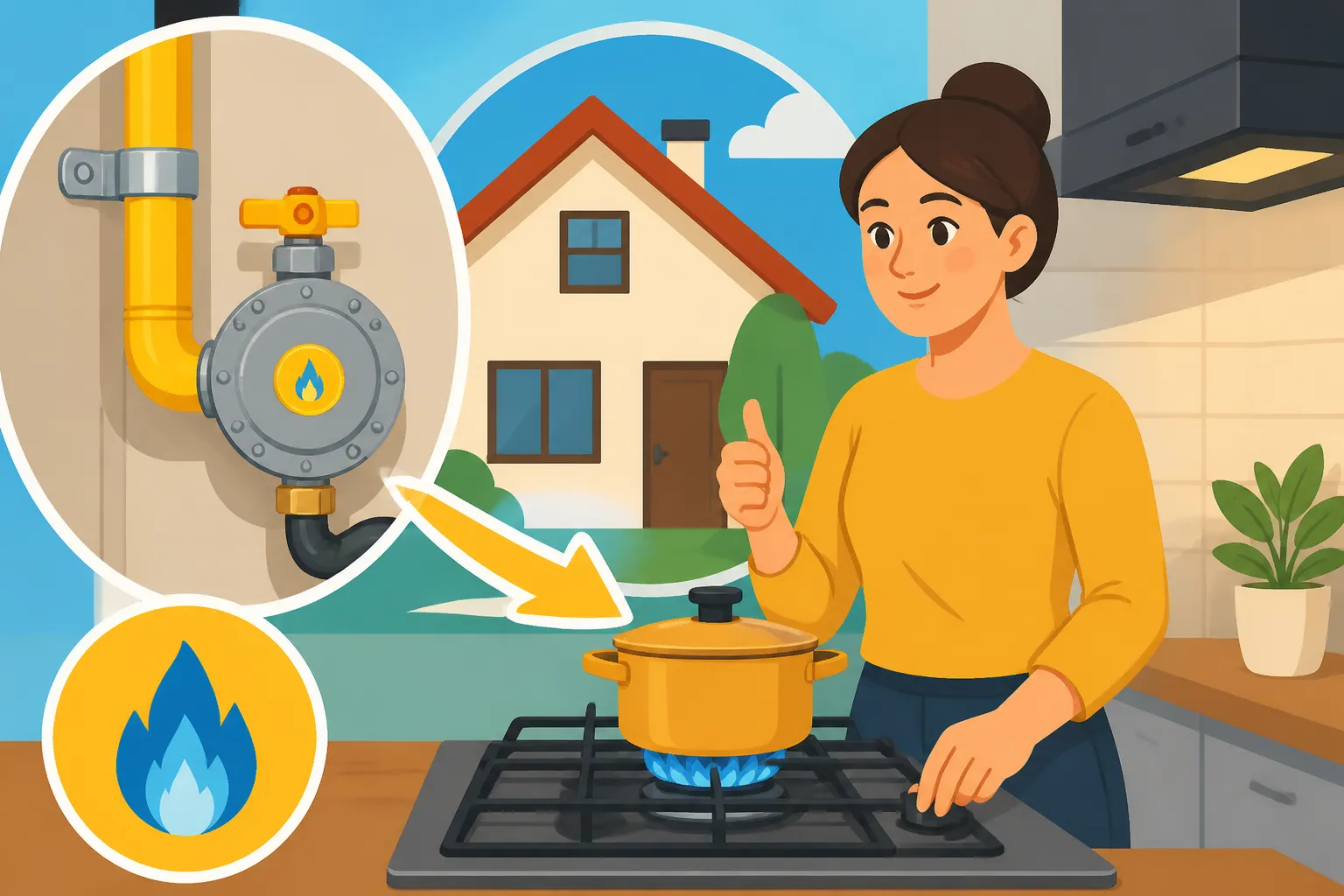
The most common form of cooking gas in Romanian homes, especially in urban and suburban areas, is natural gas. This means your home is connected to a municipal gas grid, much like water or electricity. You’ll have a gas meter, pipelines running into your kitchen, and a contract with a gas supplier. It’s generally convenient, consistent, and requires minimal hands-on management once set up. If you're renting an apartment in Bucharest, Cluj-Napoca, or Timișoara, chances are you'll be dealing with natural gas. You can usually tell if your home is plumbed for natural gas by looking for a gas meter, a visible gas pipe leading to your stove, or asking your landlord directly.
However, in many rural areas, older homes, or even some modern apartments without access to the natural gas grid, people rely on LPG (Liquefied Petroleum Gas) cylinders, often referred to simply as "butelii" (bottles). These are the familiar orange, blue, or grey gas bottles that you connect directly to your stove. While less common for primary heating, they are still widely used for cooking, particularly if you love a powerful flame or are in a location not served by the grid. If you've moved to a village or a smaller town, don't be surprised if your kitchen is set up for a gas bottle. The choice here isn't yours; it's dictated by the property's infrastructure.
The Regulatory Landscape: Distributor, Supplier, and the Consumer
Navigating Romanian utilities can feel like a labyrinth, and gas is no exception. It’s important to understand that there are generally two main entities involved in getting natural gas to your home: the distributor and the supplier. The distributor owns and maintains the physical gas network – the pipes, the meters, ensuring the gas actually reaches your building. They are typically regional monopolies, like Distrigaz Sud Rețele (part of the Engie group) for the south or Delgaz Grid (part of E.ON) for the north. You don't choose your distributor; it's assigned based on your location.
Then there's the supplier, who actually sells you the gas. This is where you do have a choice, at least in theory. Companies like Engie, E.ON, Electrica Furnizare (yes, they also supply gas!), and others compete to sell you gas at various rates. Your contract will be with a supplier, and they will handle your billing and customer service. The distributor, on the other hand, deals with technical issues, meter readings (though sometimes your supplier manages this), and connection/disconnection. This two-tier system can be confusing, but knowing who does what can save you a lot of frustration when things inevitably go sideways. When you're dealing with LPG cylinders, this complexity is largely removed, as you simply buy the gas from a vendor and it’s delivered to your door.
Step-by-Step Guide to Activating Natural Gas in Your Home
Okay, so you’ve got a home connected to the natural gas grid. Fantastic! Now comes the fun part: getting it actually flowing. This process can feel like a game of patience, requiring multiple steps and a fair bit of documentation. Don't worry, many of us have been there, juggling papers and trying to translate technical terms. Having a clear roadmap will make it a lot less daunting. This is similar to setting up other utilities, but with its own specific quirks. For a broader overview of getting all your services sorted, check out The Expat Guide to Setting Up Utilities in Romania.
Initial Checks and Documents Required
First things first, gather your documents. Romanian bureaucracy loves paperwork, and setting up gas is no exception. You'll need:
- Proof of Identity: Your passport and residence permit (permis de ședere) are crucial. Make sure you have clear copies.
- Proof of Address: This could be your rental contract (contract de închiriere) or the property deed if you own the place. The address on this document must match the address where you're requesting the gas connection. If you're still navigating getting your official proof of address, our guide on How Do I Get Proof of Address in Romania? might be helpful.
- Property Ownership/Rental Agreement: A valid rental contract, registered with ANAF, is usually required if you're a tenant. If you've just moved in, make sure your landlord has completed their side of the registration. If you're the owner, the property deed (acte de proprietate).
- Existing Gas Installation Documentation (if applicable): If the property previously had gas, there might be technical documentation or a project approval from a certified engineer. Your landlord or the previous owner should provide this. This is often called "proiect de gaz" or "autorizație de funcționare". This document confirms that the internal gas installation within the apartment or house meets safety standards. If it’s a new installation, or an old one without updated paperwork, this will be a longer and more complex process, possibly involving an authorized technician to create or update this project.
- Last Gas Bill (if reactivating): If the gas was previously active and you're just transferring the contract or reactivating it, having the last bill can sometimes speed things up, as it contains the consumption point (cod PC/loc de consum) which identifies your specific connection.
- CNP (Personal Numeric Code): Absolutely essential for almost all official transactions in Romania. If you don't have this, you won't get very far. Our guide on How to Get Your CNP (Personal Numeric Code) for Healthcare Access in Romania covers its importance for other services too.
Make sure you have both original documents and several photocopies. It’s a good practice to always have copies ready. Also, be prepared for potential language barriers; if your Romanian isn't up to scratch, bring a Romanian-speaking friend or hire a local assistant.
Contacting the Gas Distributor and Supplier
This step is critical and often where the most confusion lies. If the gas is completely cut off, meaning there’s no active contract at the address, you might need to involve the distributor first to check the physical connection and potentially reactivate the supply valve. This usually involves a technical team coming out to inspect the installation. In some cases, your chosen supplier will act as an intermediary, contacting the distributor on your behalf, but it’s always good to confirm.
Once the physical connection is verified or reactivated, you need to choose a supplier. You can't just call any company; you need to find one that operates in your area. Major players like Engie and E.ON are widely available. You can usually start the process by visiting their customer service offices, which often have specific counters for new contracts. More and more, they offer online portals or email options, but for a new connection or transfer, an in-person visit is often the most reliable.
When you contact them, clearly state your intent: "Vreau să închei un contract de furnizare gaze naturale pentru noua mea adresă" (I want to conclude a natural gas supply contract for my new address). They will ask for your documents and guide you through their specific process. Be prepared for a wait, as these things rarely happen instantly. This is where patience is key; it’s not unusual for the entire process, from initial contact to gas actually flowing, to take a few weeks.
| Feature | Natural Gas (Rețea) | LPG Cylinders (Butelie) |
|---|---|---|
| Availability | Urban/Suburban areas with grid access | Rural areas, some older apartments, specific needs |
| Connection | Fixed pipeline to home, meter, contractual supplier | Portable cylinder connected directly to appliance |
| Setup Process | Complex: distributor checks, supplier contract, documents, inspection | Simple: buy bottle, connect, ensure safety |
| Cost (Gas) | Billed monthly based on consumption and contract rates | Purchase per bottle, cost varies by vendor/size |
| Convenience | High (continuous supply, no heavy lifting) | Moderate (need to replace/refill bottles) |
| Safety | Managed by infrastructure, professional installation, regular checks | User responsibility for connection, leakage checks |
| Key Documents | Passport, residence permit, rental contract/deed, CNP, gas project | None (for purchase, ID for delivery) |
| Interruption | Rare, usually for maintenance or non-payment | When bottle runs empty |
Installation, Verification, and Contract Signing
After you’ve submitted all your documents and the supplier has processed your request, a technician from the distributor will need to visit your property. This is a crucial step for verification and activation. They will inspect the internal gas installation to ensure it’s safe and compliant with Romanian standards. This inspection typically includes checking the integrity of the pipes, the connection to your stove, and the overall ventilation of the area where gas appliances are located. If any issues are found, you’ll be informed, and you'll need to rectify them (often hiring a certified private technician) before the gas can be turned on.
Once the technical inspection is passed, the technician will either activate the gas supply (if it was previously cut off at the main valve) or simply read the meter and confirm the connection. After this, your supplier will finalize your contract. You'll typically sign a supply agreement outlining the terms, conditions, and pricing. Make sure you understand the contract, especially the unit price of gas (lei/kWh or lei/mc), payment terms, and duration. For general advice on contracts, consider reading How to Sign a Rental Contract (Contract de Închiriere) in Romania, as many principles apply.
You'll then receive your first bill. Understanding your Romanian utility bills can be tricky, so our guide on Understanding Your Utility Bills (Facturi) in Romania is definitely worth a read. Remember that sometimes the first bill can be an estimate, and a proper reading will follow.
Navigating LPG Cylinder Setup and Usage
For those of you finding yourselves in a home where natural gas isn't an option, fear not! LPG cylinders are a very common and viable solution for cooking. It's a different setup entirely, more hands-on, but once you get the hang of it, it's quite simple.
Sourcing and Safety Considerations for LPG Cylinders
Getting an LPG cylinder is generally straightforward. You can find them at petrol stations (like OMV Petrom or Rompetrol), specialized gas depots, or even some larger supermarkets or hardware stores in smaller towns. There are also many local distributors who offer home delivery. Just look for signs saying "GPL" or "Butelii de gaz."
When you purchase a cylinder for the first time, you might need to pay a deposit for the bottle itself, as you're essentially borrowing it. Subsequent purchases will be exchanges – you bring your empty bottle, and they give you a full one, you just pay for the gas. The cost varies by location and the size of the bottle (typically 11kg or 15kg).
Safety is paramount with LPG. Always ensure the cylinder you receive is sealed and appears in good condition. Never accept a damaged or unsealed bottle. Store the cylinder upright in a well-ventilated area, away from direct sunlight and heat sources. Never store it in a bedroom or any unventilated enclosed space. Make sure your gas stove and its connections (hose and regulator) are specifically designed for LPG use. If you're unsure, have a qualified technician check your appliances.
Connecting and Disconnecting Your Gas Bottle
Connecting an LPG cylinder to your stove involves a few simple steps, but precision and attention to detail are key. You will need:
- A Regulator: This small device attaches to the cylinder valve and reduces the high pressure of the gas in the bottle to a safe, usable pressure for your stove. Make sure it's the correct type for LPG and has a pressure gauge if possible.
- A Gas Hose: This flexible hose connects the regulator to your stove's gas inlet. It must be specifically rated for gas and in good condition, without cracks or wear.
- Hose Clamps: To secure the hose firmly to both the regulator and the stove, preventing leaks.
To connect:
- Turn off all stove burners.
- Ensure the cylinder valve is closed.
- Attach the regulator to the cylinder valve. It usually screws on clockwise. Tighten it firmly by hand, but don't overtighten, as this can damage the seal.
- Connect the gas hose to the regulator's outlet and to your stove's inlet. Secure both ends with hose clamps.
- Slowly open the cylinder valve. You should hear a faint hiss as the gas enters the system.
- Check for leaks: The most common method is to spray a soapy water solution (or even just rub some dish soap with water) around all connections – the regulator to the bottle, and the hose to both the regulator and the stove. If you see bubbles forming, you have a leak. Immediately close the cylinder valve and re-tighten the connections or replace faulty components. Do not use the stove if there's a leak!
- Once no bubbles are present, your system is ready. You can now turn on a burner and light it.
To disconnect (when replacing an empty bottle):
- Turn off all stove burners.
- Close the cylinder valve tightly.
- Light a burner and let it burn until the flame goes out. This ensures all gas pressure in the hose and stove is released.
- Turn off the burner.
- Loosen the hose clamps and detach the hose.
- Unscrew the regulator from the empty cylinder.
- Place the cap back on the empty cylinder's valve if provided.
Always perform these operations in a well-ventilated area, and never near an open flame or spark source. This hands-on aspect can be intimidating at first, but with practice, it becomes second nature.
Troubleshooting and Important Considerations for Expats
Even with a detailed guide, things can go wrong or simply not go as planned. It's Romania, after all! Anticipating potential issues and knowing how to react is part of the expat experience.
Common Pitfalls and How to Avoid Them
One of the most common pitfalls, especially for natural gas, is a lack of up-to-date documentation for the internal gas installation. If your apartment has old or non-compliant pipes, or if the previous owner/landlord never got the "proiect de gaz" updated, you could face significant delays and additional costs for inspection and potential repairs. Always ask your landlord or the seller for all gas-related documents before moving in or buying. A thorough property check, including utilities, is part of why services like Sirelo, which assist with international moves, emphasize careful planning.
Another issue is the language barrier. While many utility companies have some English-speaking staff, especially in larger cities, you can't always count on it. Going in person with a Romanian speaker or using Google Translate extensively for online forms or emails can be a lifesaver. This is especially true for understanding the specifics of your contract or explaining a technical issue. For daily communication and learning the language, platforms like Duolingo or even local language courses, as outlined in Learning Romanian: A Complete Guide to Language Courses and Levels, can be immensely helpful.
Finally, expect delays. Nothing happens overnight in Romanian bureaucracy. Be patient, follow up diligently, but don't expect instant gratification. Plan your move accordingly, perhaps relying on a microwave or electric hot plate for cooking during the interim period. For mobile data to help with all this research and communication, especially when you first arrive, a local eSIM from a provider like Airalo can be invaluable, saving you from hunting for physical SIM cards while you're trying to get your utilities sorted.
Safety First: What to Do in Case of a Gas Leak
This is not to scare you, but to empower you with knowledge. Gas leaks, while rare, are a serious matter. Natural gas is odorless by itself, but suppliers add a chemical to give it a distinctive, unpleasant smell (like rotten eggs) to make leaks detectable. LPG also has this smell.
If you suspect a gas leak:
- Do NOT turn on or off any electrical switches, lights, or appliances. This could create a spark.
- Do NOT use your phone, lighter, or any other ignition source.
- Immediately open all windows and doors to ventilate the area.
- Close the main gas valve for your apartment/house (if natural gas) or the valve on the LPG cylinder.
- Evacuate everyone from the premises.
- Once safely outside, call the emergency number 112. Clearly state that you suspect a gas leak ("Suspect o scurgere de gaze"). They will dispatch the fire department (pompieri) and the gas distributor's emergency team.
- Do NOT re-enter the building until emergency services declare it safe.
Most homes, especially newer builds or renovated ones, should have gas detectors installed, which will alarm if gas is detected. It's a good investment if your home doesn't have one already. Regular checks of your gas pipes and connections, especially for LPG cylinders, are also crucial. Look for visible damage, corrosion, or any unusual smells.
Getting your gas sorted for cooking might be a hurdle, but it's a completely surmountable one. Arm yourself with patience, your documents, and maybe a Romanian friend, and you'll be cooking up a storm in your new home in no time!
Disclaimer
The information provided in this guide is for general informational purposes only and does not constitute legal, financial, or professional advice. While we strive to keep the information up-to-date and accurate, regulations and procedures in Romania can change frequently. Always consult with official sources, relevant authorities, or professional advisors for specific guidance pertaining to your individual situation. The author and publisher are not responsible for any actions taken based on the information presented herein.